


On Monday night, Brazil played Japan in the World Cup round of 32 (don’t worry, this isn’t a match report). The pundit team were talking about how different the two countries were; “Samba vs Samurai”.
On the surface, you can see why.
But have you ever wondered why Brazilian Jiu-Jitsu exists?
Unlikely as it seems, Brazil and Japan have more than a century of joint economic and cultural history. Today, there are 2 million people of Japanese descent living in Brazil – the largest population outside of Japan.
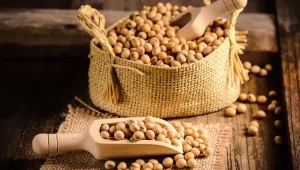
But the biggest legacy is a bean:
Source: Wikimedia Commons
Soybeans are the most versatile bean in the world – used as food for animals and humans but also processed into biodiesel, industrial lubricants and even Crayola crayons!
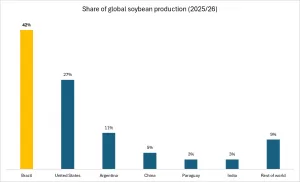
And Brazil is the undeniable champion when it comes to production; growing almost half of the world’s soy. It’s Brazil’s biggest export product.
Source: US Department of Agriculture
Yet soybeans aren’t even native to South America …
In 1908, 781 Japanese immigrants arrived in Sao Paulo, tempted by the wages on offer in the Brazilian coffee fields and leaving their overcrowded home islands. Over the next twenty years, 100,000 more followed.
And hidden in suitcases and pockets were things that were important to them from home – including soybeans.
For the first couple of generations, these beans were used for small-scale farming; just enough to make sauce or tofu for the family.
Then, in 1973, Richard Nixon banned the US from exporting soybeans. At this time, industrialised Japan imported almost ALL of its soybeans from the US, so this caused an immediate food crisis.
The Japanese expats suggested that the solution lay in South America; so the Japanese and Brazilian governments teamed up to solve the problem.
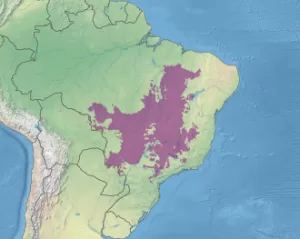
Billions of dollars and five years later, they had created a new soybean version which was resilient enough to be grown in the area around Brasilia, previously deemed unproductive.
Source: Wikimedia Commons
In 1970 Brazil grew less than 2 million tonnes of soy. This year, the Cerrado region above will produce 180 million tonnes.
So, sure, samba and samurai culture seem like opposites. But mash them together and you get one of the biggest agriculture markets in the world … what an argument for the unexpected impact of diversification!
*Disclaimer* This article is for general information only and does not constitute advice. The information is aimed at UK retail clients only.
All information is correct at the time of writing and is subject to change in the future. Data Source 7IM

 Production