


Here we go! WORLD CUP FEVER is sweeping the 7IM office.
Sweepstakes, wall charts, the rivalry between our London and Edinburgh offices … it’s all kicking off (literally) this week.
But. What has REALLY got the Investment team going, is this year’s Panini sticker album:
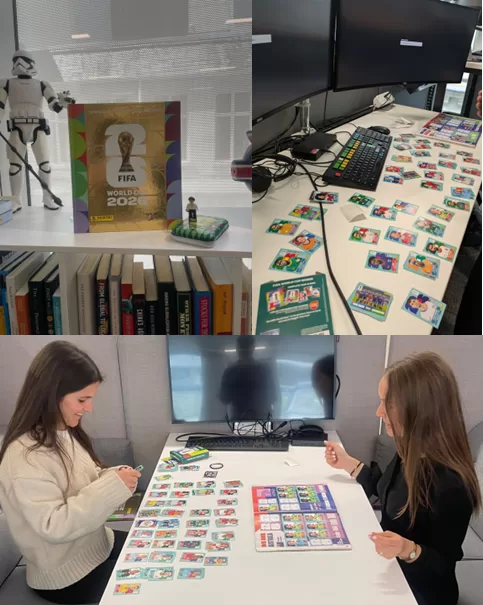
Hunting for rare opportunities, the trading with other teams (or children), plus the nostalgia factor for a team who definitely spent their youth sticking, rather than kicking.
And while the thrill of the chase is real, we couldn’t resist doing a bit of analysis either …
The 2026 Panini FIFA World Cup sticker album is the biggest in history. The album includes a massive 980 stickers, representing the 48 teams that will be playing over the coming six weeks.
Now, how much might it cost you to complete the sticker book? In an ideal world, you’d buy 140 packs, with 7 stickers to a pack, and with absolutely NO duplicates – it would cost £175.
But there’s a reason that Panini doubles its annual sales in a World Cup year (it reckons it will make $1.5 billion from sales this summer alone. On stickers!!)
The numbers are in Panini’s favour:
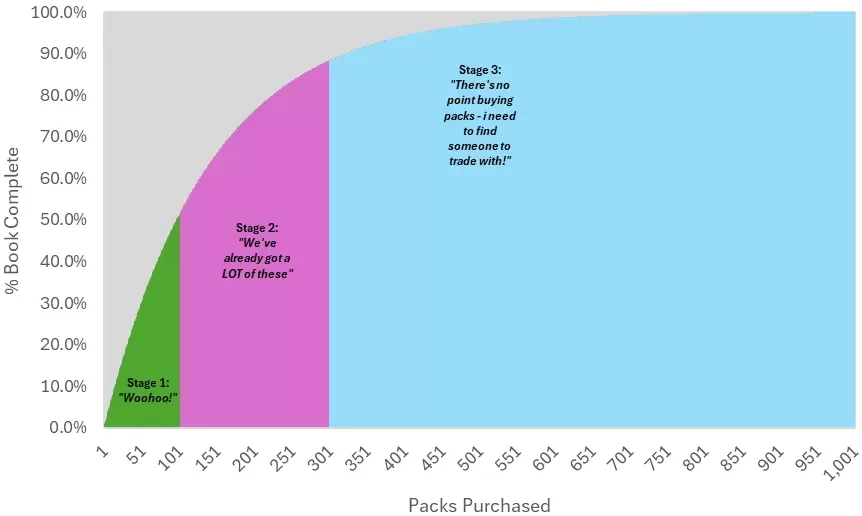
After buying 100 packs (700 stickers), you’re around 50% complete. But now it gets harder.
It’s not bad luck – it’s just maths; The Law of Diminishing Returns:
Stage 1. Early packs deliver rapid progress – almost every sticker is new.
Stage 2. Each new pack has a few stickers you’ve already got. You start recognising familiar faces (Jeremy Doku and Declan Rice in our case!).
Stage 3. You should stop buying packs once you’re around 90% complete (around 300 packs, so £375 spent). If you need 50 stickers to complete the book, you’d have to buy 600 PACKS of stickers. Time to start swapping!
Is there an investment analogy here? Of course!
Lots of investors think that continually adding stocks or funds to their portfolios increases diversification. But there’s a sweet spot, like sticker collecting. For a given allocation (say, UK Equity), once you’ve got 4 funds, adding any more doesn’t help. Risk doesn’t reduce, and returns don’t increase.
Changing the portfolio requires swapping, not buying (although less frequently than with stickers!).
*Disclaimer* This article is for general information only and does not constitute advice. The information is aimed at UK retail clients only.
All information is correct at the time of writing and is subject to change in the future. Data Source 7IM

 Production